
- Food
Made in House, On Purpose
Made in House, On Purpose
Walk into any Coco Social House and the menu doesn't read like a typical brunch spot. Look closer and a pattern starts to show up again and again: house-made sauces, protein worked into things that don't usually have it, ingredients described with enough specificity that you can tell someone actually thought about them. That's not an accident. It's the closest thing the brand has to a food philosophy, even if nobody ever wrote it down as a mission statement.
Nothing Arrives Pre-Made
Across the menu, the same phrase keeps showing up in different forms: homemade. Homemade yogurt sauce. Homemade tomato purée. Homemade blueberry sauce. Homemade granola. It would be easy to treat that word as filler, the kind of thing every menu claims whether or not it's true. But the specificity around it suggests otherwise, sauces built from named ingredients (natural yogurt, cream cheese, cucumber, lemon, a touch of citric), not vague gestures at "special sauce."
That matters more than it sounds like it should. A kitchen that's willing to make its own yogurt sauce instead of buying a bottled one is making a choice about where its effort goes, not toward speed, but toward control over flavor. It's a slower way to run a brunch menu, and it shows in how specific the descriptions get.
Protein, Without the Usual Compromise
The other thread running through the food here is protein, worked into dishes that don't traditionally carry much of it. Protein pancakes. Protein yogurt bowls. Protein Turkish eggs. This isn't a menu built around a diet trend bolted onto existing dishes, it's a rethink of what a "healthy but still indulgent" brunch actually requires.
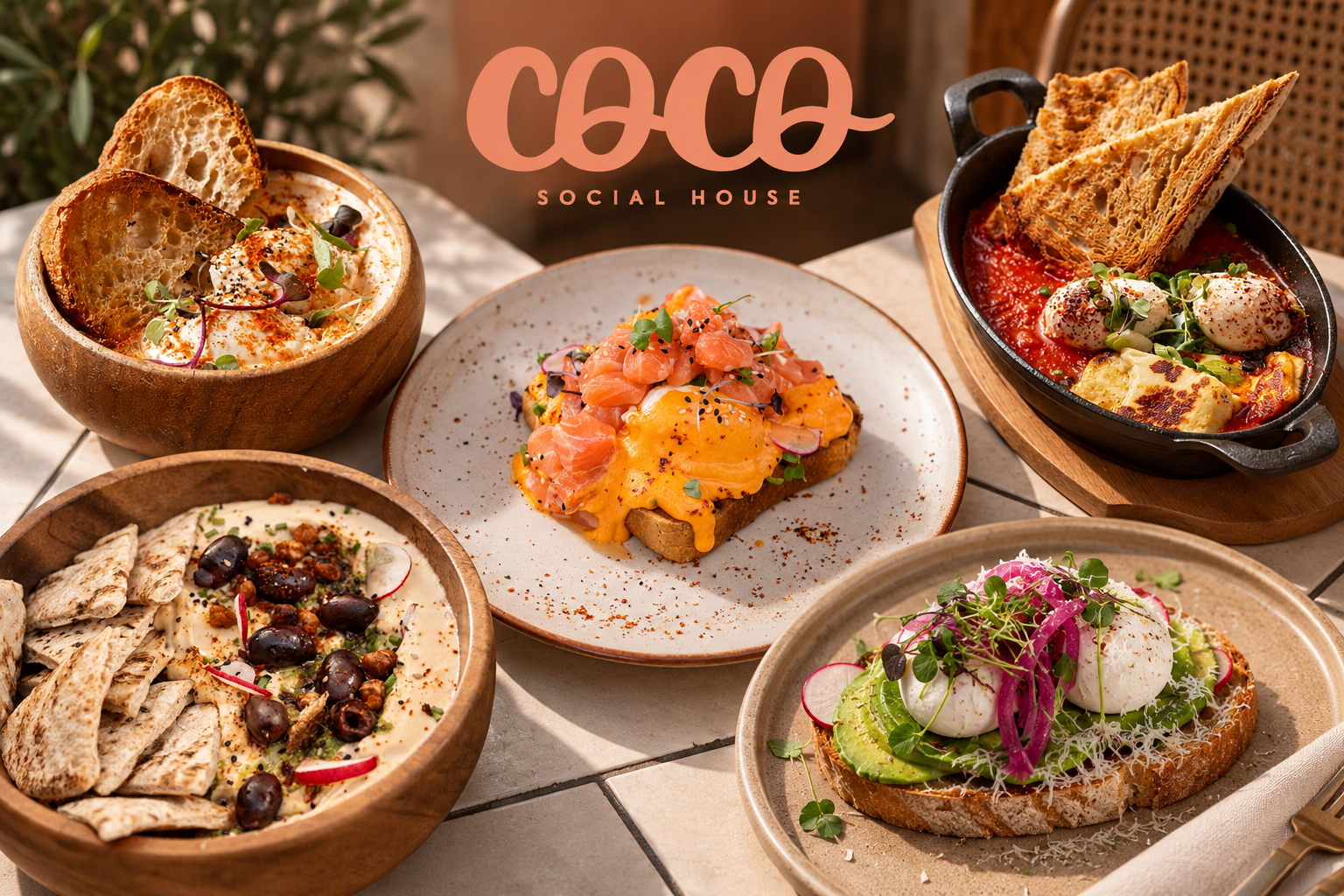
The eggs are a good example. Turkish eggs traditionally lean rich and heavy, poached eggs over garlicky yogurt, finished with spiced butter. The Coco Social House version keeps that basic structure but works protein into the yogurt base itself, so the dish still reads as indulgent while doing more nutritional work than the original.
Ingredients That Get Named, Not Just Implied
There's a specificity to how dishes get described here that's worth noticing. Not "salmon," but house-marinated salmon, cured with sea salt, finished with thin orange slices and dill. Not "eggs," but eggs poached a particular way, seasoned with red pepper oil and spring onions.
That level of detail isn't necessary for a menu to function. The choice to be this specific says something about who the menu is actually written for, guests who care about what's in front of them, not just that something arrives on a plate quickly.
Fresh Over Convenient
Scrambled eggs made to order rather than pre-cooked. Granola made in-house rather than bought in bulk. Salmon cured on-site rather than sourced pre-cured. Each of those choices costs more time in the kitchen than the easier alternative would.
That's the actual philosophy, even if it's never printed anywhere as a mission statement: brunch built the slower way, on purpose.
The Takeaway
None of this is about any single dish being the star. It's about a pattern that shows up across the whole menu, all pointing toward the same underlying choice: do it properly, even when the shortcut is sitting right there.